
You served. Now let us.
We honor those who served by serving them at the end of life. Our clinicians are trained in what veterans carry, including memories and emotions that can resurface near the end for anyone who saw combat or trauma. Our goal for every veteran is peace, dignity, and self-forgiveness.We honor those who served by serving them at the end of life. Our goal for every veteran is peace, dignity, and self-forgiveness.
What happens, in order
Three parts of veteran care that families ask about most, in the order they tend to arrive.
-
1
Why the end of life can be different for a veteran
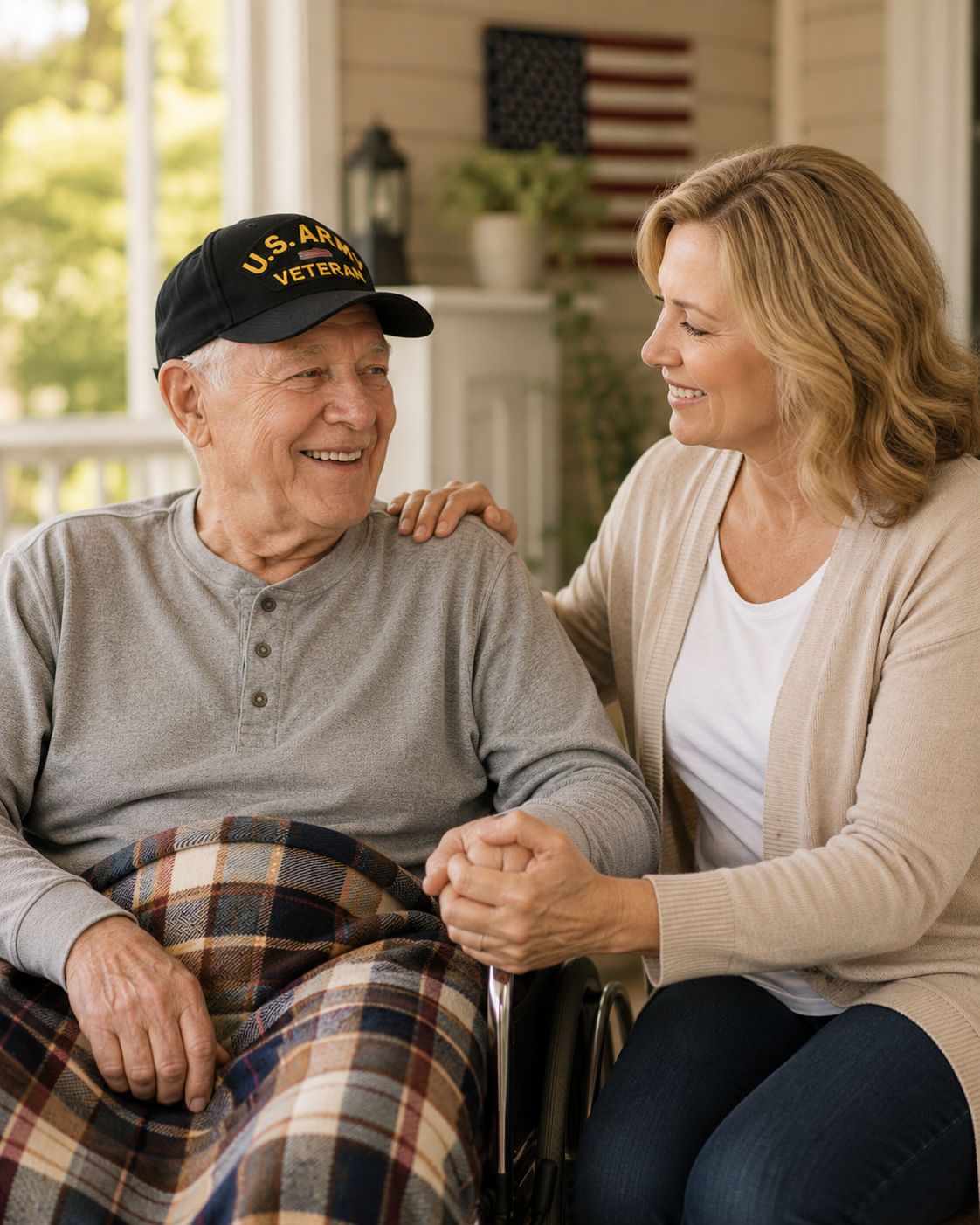
A generation trained never to complain will under-report pain. A man who has answered "I am fine" for sixty years does not stop at the end.
Memories that stayed quiet for decades can surface near the end. Some carry things they have never told anyone.
Our clinicians are trained to recognize this and not to force it. We ask, we listen, and we let the veteran decide what gets said and when.
-
2
What a pinning ceremony is like
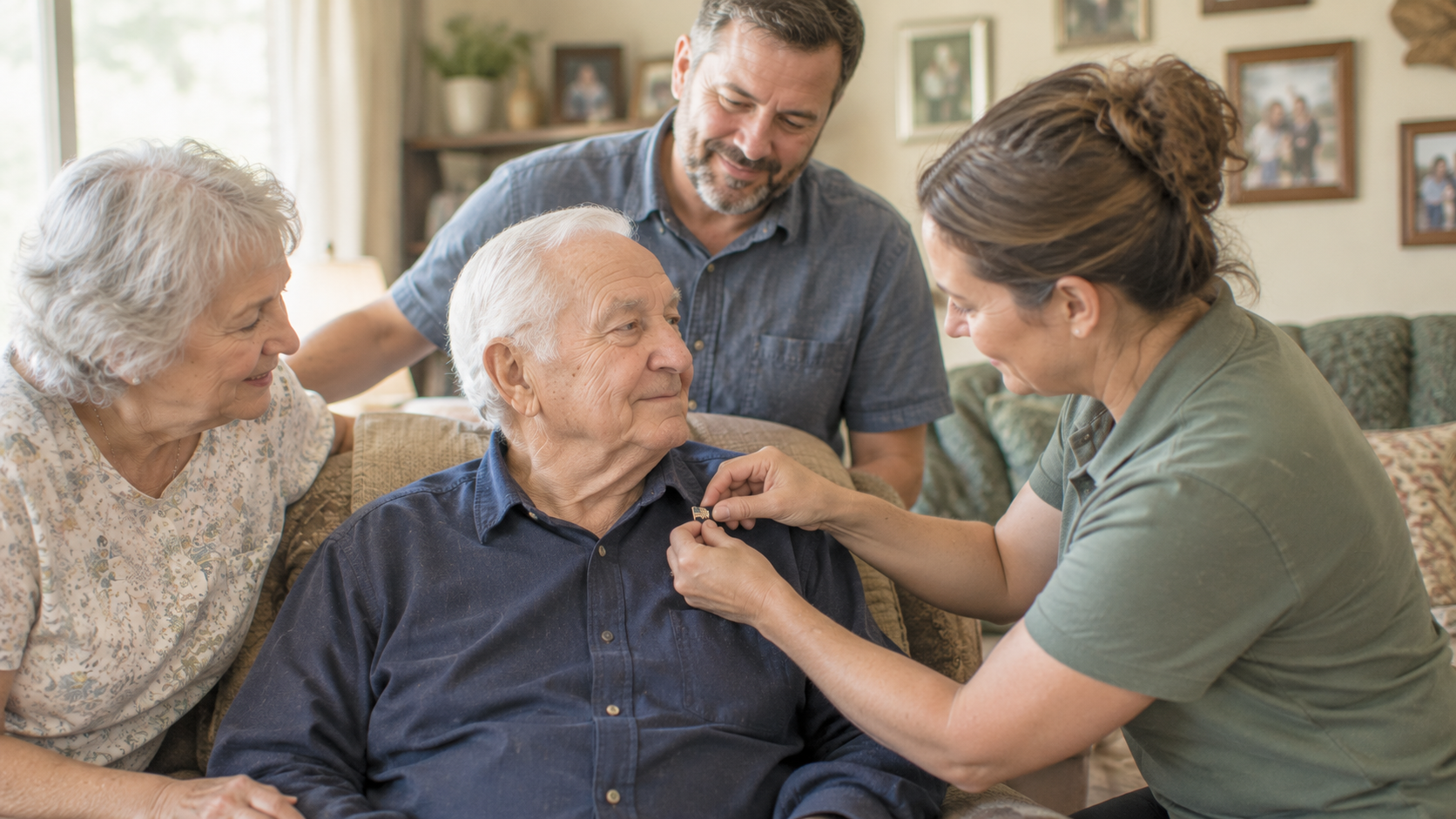
The family gathers in the living room, or around the bed. Someone reads out the branch, the years, and where he served. There is a certificate and a lapel pin, and the pin is put on by another veteran.
Then the salute. One veteran to another, held a second longer than you expect.
Families tell us afterwards that it is the moment they will never forget, and often the first time in years that anyone thanked him out loud.
-
3
Navigating benefits together
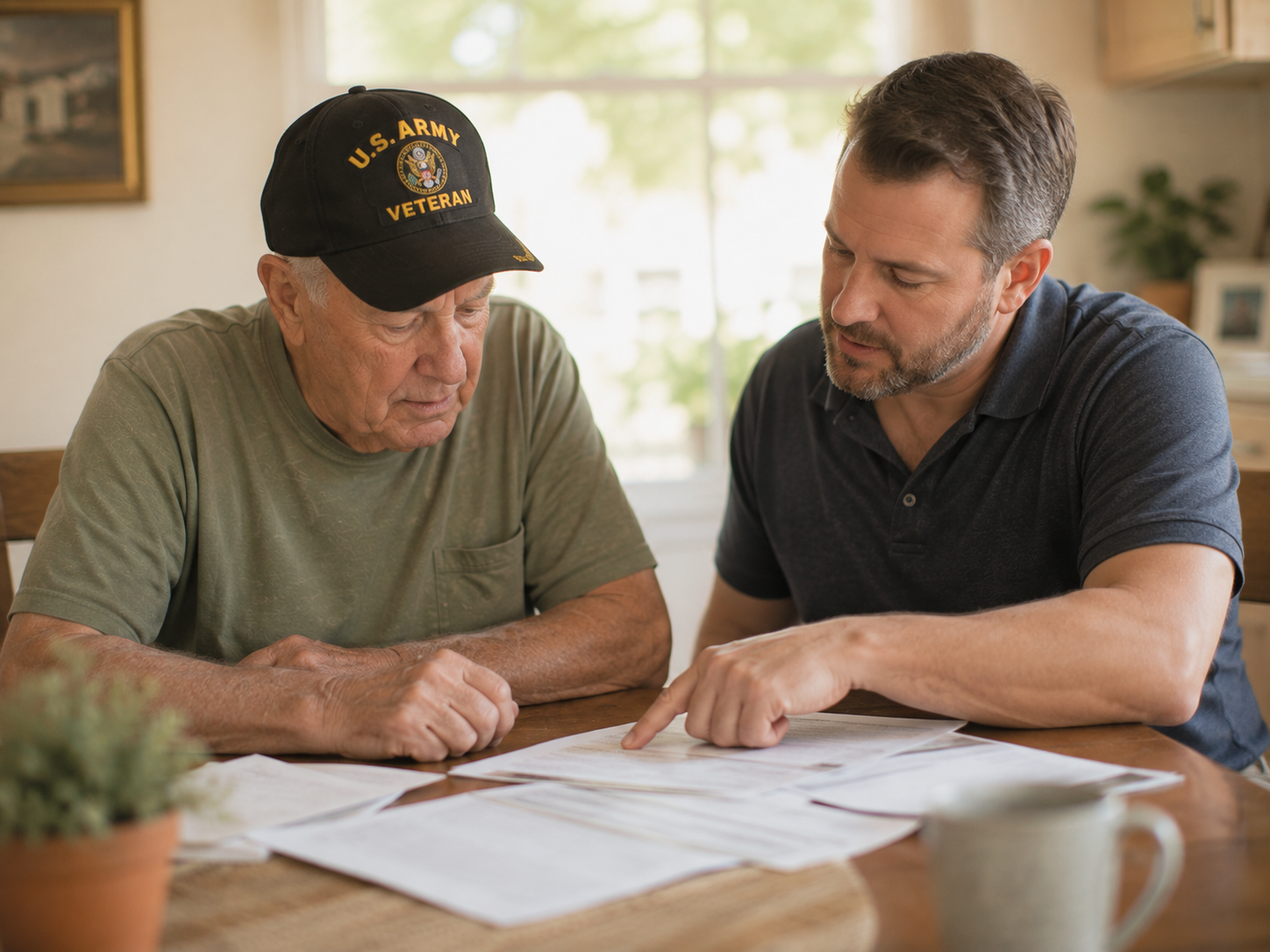
We review what may be available through the VA, help with the paperwork, and coordinate with VA medical staff so nothing falls between two systems.
Nobody should have to become a benefits expert in the middle of this. That part is our job, not yours.
In practice that often means a joint visit: our nurse and a VA clinician agreeing on one plan instead of two. When something changes at nine on a Sunday night, nobody has to work out which system to call first.